
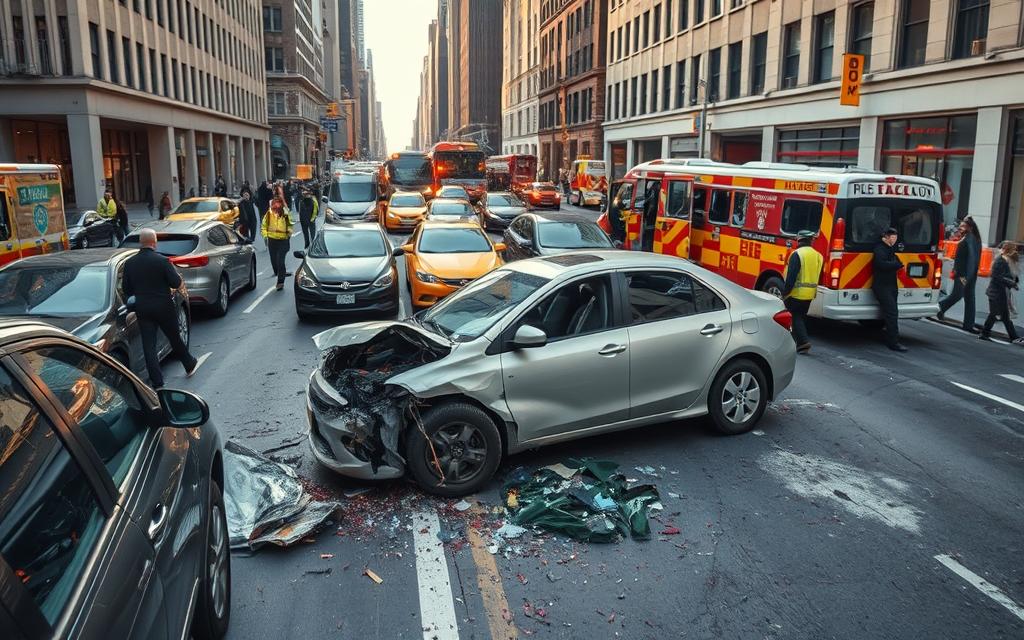
Road Rage and Aggressive Driving Put Drivers at Risk of Collisions
Roads and highways are riddled with drivers who exhibit aggressive driving behaviors and road rage. According to AAA, 56% of auto accidents are linked to aggressive driving. This creates dangerous conditions and often leads to catastrophic car accidents. To the average driver, road rage and aggressive driving can seem like one and the same, but drivers who act recklessly and carelessly in traffic don’t always escalate to the level of road rage.
Road rage and aggressive driving aren’t criminal offences. However, a driver’s actions while exhibiting these behaviors can lead to criminal charges and lawsuits. Even if you refrain from engaging in road rage and driving aggressively, you’re still bound to encounter other drivers who will. Let’s discuss how these driving behaviors pose a serious risk to public safety and what to do if you are injured in a collision due to reckless driving.
Differences Between Road Rage and Aggressive Driving
Aggressive driving and road rage are broad-ranging terms. They are not limited to one action but a collection of driving habits that put those on the road at risk. When an individual commits a combination of moving traffic offenses that can endanger other people or property, they are engaging in aggressive driving, according to the National Highway Traffic Safety Administration (NHTSA). Aggressive driving doesn’t imply that a driver is angry or in a bad mood. You can be calm and still contribute to an accident due to aggressive driving.
Traffic Offenses that are considered aggressive driving behaviors are:
- Speeding
- Running a red light
- Failure to yield the right of way
- Tailgating
- Failure to use turn signals when changing lanes
- Weaving
- Ignoring traffic signs.
The line between aggressive driving and road rage is thin. The National Safety Council (NSC) defines road rage as “a physical assault of a person or vehicle as a result of a traffic incident.” Unlike aggressive driving, where driving behaviors are strictly limited to using unfavorable and risky driving maneuvers, road rage involves using a vehicle as a weapon with the intention of harming others or their property.
In extreme cases, aggressive driving can fuel instances of road rage. Drivers may become stressed, frustrated, or angry when they feel like they’re being cut off, tailgated, or slowed down by other drivers. Heavy traffic and delays can also trigger road rage. This tension on the road can result in the driver using curse words or making offensive gestures, throwing objects at the victim, intentionally ramming into another vehicle, and even forcing it off the road.
Drivers who are more prone to road rage:
- Are more aggressive
- Are impatient
- Have a history of road rage
- Are sleep-deprived
- Are under the influence of drugs or alcohol.
Aggressive driving may seem harmless compared to road rage, but both types of driving behaviors can lead to accidents that cause property damage and result in costly repairs. They can also cause injuries that require medical attention, which is costly in the form of medical bills and in lost wages should the victim lose their ability to work. Accidents caused by aggressive driving and road rage can be fatal, taking a toll on families and loved ones.
The Consequences of Aggressive Driving And Road Rage
Based on the alarming statistics for road rage and aggressive driving, the majority of drivers are on the receiving end of the accidents caused by these hazardous driving behaviors. States across the US are creating legislation and policies that focus on stricter penalties for aggressive drivers in the form of traffic citations, fines, and the accumulation of points on licenses that can lead to a suspended license or higher insurance premiums. Drivers who engage in road rage and aggressive driving can also receive criminal charges such as assault, reckless endangerment, manslaughter, or vehicular homicide.
Protect Victims of Road Rage And Aggressive Driving Accidents
If you’ve exhibited calm and careful behavior behind the wheel, yet found yourself in a car accident due to the reckless or violent driving of others, you should seek a personal injury settlement with the assistance of a car accident lawyer.
Damages you may be entitled to for your car accident injury include:
- Current and future lost wages
- Current and future medical expenses
- The replacement value of personal property that was damaged
- Pain and suffering
- Loss of enjoyment of life.
When handling your case, personal injury lawyers evaluate the facts and evidence by working with investigators, expert witnesses, and accident reconstructionists to prove that another driver’s careless and aggressive behavior caused the accident and the injuries that resulted from it. The laws surrounding these driving behaviors are often too intricate for victims to understand on their own, so enlist an attorney who will fight for fair compensation through negotiation or, if necessary, through litigation.
Avoid Reckless and Violent Driving Behaviors
Alertness, composure, and de-escalation tactics are key components to reducing the outcome of contributing to or experiencing an accident caused by aggressive driving or road rage. In cases where a driver is being aggressive, don’t respond to them with aggression.
Making eye contact or using gestures towards an already aggressive driver could heighten the situation and lead to a wreck. Avoid tailgating vehicles if the driver is displaying erratic or hostile behavior by keeping a safe distance. If someone is driving aggressively, it’s best to safely change lanes and let them pass instead of competing over limited space. Pull over to a safe area and report reckless or violent drivers to local authorities by calling the police, filing a report, or filling out a witness statement.
To keep yourself, loved ones, and other drivers safe from reckless driving, adhere to traffic laws and drive carefully to get to your destination without the fear of a collision.
