
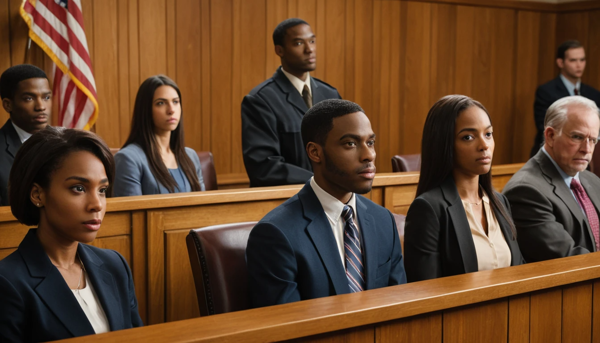
What Is the Role of a Jury: Discover Its Powerful Impact
What is the role of a jury? Learn how juries protect justice, ensure fairness, and empower everyday citizens in the courtroom system.👩⚖️
What is the Role of a Jury? ⚖️
Ever wonder how 12 strangers decide someone’s fate in court? 🤔
It sounds dramatic, maybe even risky. But, this is a key part of justice in the U.S. Let’s explore what a jury does and why it’s important.
Understanding the Jury System 🧠
A jury is a group of ordinary people chosen to decide legal cases.
They don’t wear robes or act as lawyers. They’re just like you and me. Their job is to listen to both sides and decide fairly based on evidence.
The Jury’s Job in a Nutshell 📜
So, what is the role of a jury in simple terms?
👉 To listen to facts, evaluate evidence, and make a fair decision.
That’s it—simple, but very important.
Here’s how it works:
- The jury hears opening statements from both sides.
- They listen to witnesses and examine the evidence.
- They follow the judge’s legal instructions.
- They privately discuss the facts.
- Then, they make a verdict—guilty, not guilty, or liable.
Civil vs. Criminal Jury: What’s the Difference? ⚖️
Not all juries are the same. There are two main types in the U.S.:
| Type of Jury | Purpose | Verdict Outcome |
|---|---|---|
| Criminal Jury | Decides guilt in criminal cases | Guilty or Not Guilty |
| Civil Jury | Resolves disputes between parties | Liable or Not Liable |
- Criminal juries must often reach a unanimous decision.
- Civil juries may only require a majority.
Jury Selection Process 🎯
Ever got a jury summons? That’s the start of jury selection, or voir dire.
Here’s what happens:
- A random list of citizens is chosen.
- Lawyers ask questions to the selected citizens.
- Jurors are checked for bias or conflict.
- A final panel is chosen to serve.
The goal? A fair, impartial jury with no personal stake in the case. 🙋♂️🙋♀️
Why Do We Even Have Juries? 🏛️
The idea of trial by jury goes back to ancient Greece and England.
The U.S. Founding Fathers thought it was so important, they included it in the 6th and 7th Amendments of the Constitution.
Juries ensure:
- Fairness: Decisions aren’t made by just one person.
- Public participation: Everyday people help shape justice.
- Accountability: Judges and lawyers don’t have all the power.
A Jury’s Role in Protecting Rights 🛡️
A jury does more than judge facts. It protects your constitutional rights.
In criminal trials, the jury checks the government’s power.
They ensure:
- The accused gets a fair trial.
- Laws are applied justly.
- Evidence is strong and not based on bias.
The Power of Jury Deliberation 🗣️
Deliberation is when jurors talk it out behind closed doors.
They:
- Review facts and testimonies.
- Discuss different viewpoints.
- Vote on a verdict—sometimes multiple times.
This is where justice is truly decided. Every juror has a voice, and no one can be pressured to change their mind.
Jury Duty: More Than Just a Civic Task 🧾
Many people groan when they get called for jury duty. But here’s the thing:
✅ It’s not just a chore—it’s a privilege.
✅ You get to be part of the justice system.
✅ Your voice can protect someone’s rights or give someone justice.
Real-Life Impact of Juries 🧍♂️🧍♀️
Think juries don’t matter?
Here are a few major cases where juries made history:
| Case Name | Year | Impact |
|---|---|---|
| O.J. Simpson Trial | 1995 | Public debate on race, celebrity, and justice. |
| McDonald’s Hot Coffee | 1994 | Changed how we view corporate responsibility. |
| Derek Chauvin Trial | 2021 | Global attention to police accountability. |
One jury can change a life—or even history. 🌍
Limits of Jury Power 🚫
While powerful, juries don’t decide everything.
They can’t:
- Choose the punishment (judges usually do that).
- Interpret the law (they follow what the judge says).
- Act based on feelings or sympathy.
Juries must rely on evidence and law—not emotion. 🧠
Challenges Juries Face 😟
Jury duty isn’t always easy. Jurors face challenges like:
- Confusing legal terms.
- Emotional testimonies.
- Peer pressure in deliberation.
- Long trials or complex cases.
That’s why judges give clear instructions—to keep things fair and focused.
The Role of a Foreperson 🧑💼
Every jury has a foreperson, kind of like a team captain.
They:
- Lead discussions.
- Keep things organized.
- Speak to the judge.
- Deliver the verdict in court.
It’s a big responsibility—but a rewarding one.
What Happens After a Verdict? 📣
Once a verdict is reached:
- The foreperson announces it in court.
- The judge may accept it or call for more review.
- The trial ends—or moves to sentencing or appeal.
If the jury can’t agree, it’s called a hung jury. Then, the case might be retried.
Grand Jury vs. Trial Jury 🧑⚖️👥
You might’ve heard of a grand jury too. It’s different from a trial jury.
| Feature | Grand Jury | Trial Jury |
|---|---|---|
| Size | 16–23 people | 6–12 people |
| Purpose | Decides whether to indict | Decides guilt or liability |
| Meets In | Private | Open court |
| Outcome | Issues charges | Reaches a verdict |
Grand juries are more about starting the process; trial juries finish it.
Can Jurors Ask Questions? ❓
In most trials, jurors aren’t allowed to ask questions.
But in some states, judges let jurors write questions down.
The judge reviews them and decides if they can be asked.
This keeps trials fair and avoids confusion. 📝
How Jurors Stay Fair 🤐
To stay neutral, jurors must:
- Avoid reading news or social media about the case.
- Not talk to anyone outside court.
- Keep an open mind until deliberation.
Breaking these rules can lead to a mistrial. This means the whole case must start over.
Final Thoughts: Why Jury Service Matters 🎯
So, what is the role of a jury?
Here’s the takeaway:
Juries bring justice down to Earth.
They make the law human. They make trials fair. And they remind us that in America, your voice really does matter.
So the next time you’re called for jury duty, remember—it’s not just a duty.
✨It’s a chance to be part of something bigger than yourself.✨
FAQs 🤓
What does a jury actually do in court?
A jury listens to evidence, weighs the facts, and decides the outcome of a trial. Their verdict must follow the law and the judge’s instructions.
How many people are usually on a jury?
Most juries have 6–12 members, depending on the type of trial. Criminal trials usually require 12 jurors for a unanimous decision.
Why is a jury important in the legal system?
Juries ensure fairness and reduce bias by letting everyday citizens help decide legal outcomes. They balance power between the courts and the people.
What happens if jurors can’t agree on a verdict?
If jurors can’t reach a unanimous decision, the judge may declare a hung jury. This usually results in a new trial with a different jury.
Can anyone be selected for jury duty?
Yes, most U.S. citizens over 18 can be selected if they have no disqualifying criminal record. Jury selection ensures they’re unbiased and capable.
Reference Sources:
https://www.uscourts.gov
https://www.law.cornell.edu
https://www.justice.gov


